WHO URGES PEOPLE NOT TO ASSOCIATE TERMS SUCH AS “FLURONA” OR “DELTACRON” WITH COVID-19
During November and December, the terms "Flurona" and "Deltacron" began appearing in the media and on social networks. These names were created by combining the words flu and coronavirus, and the Delta and Omicron variants, respectively. But what do these terms actually mean? More importantly, are they scientifically accurate?
The terms Deltacron, Flurona, and Flurone suggest that viruses or their variants have combined into a new pathogen. However, these expressions have not been accepted by the scientific community, as several experts have pointed out that they are misleading.
THE WHO ON "FLURONA" AND "DELTACRON"
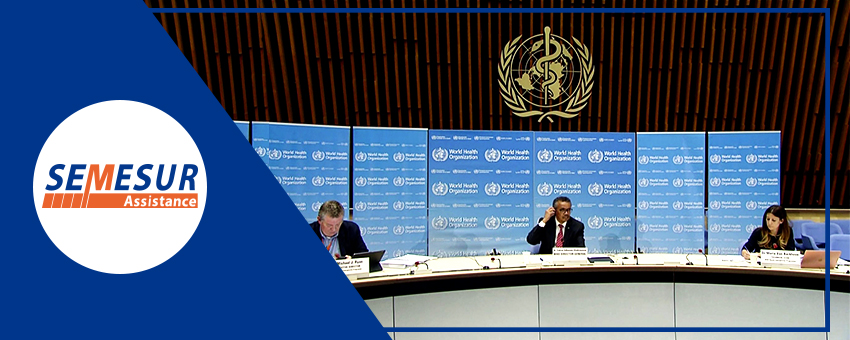
The World Health Organization (WHO) has urged the public not to use the terms "Deltacron" and "Flurona" when referring to COVID-19, as they do not accurately describe the current scientific understanding of the pandemic.
Dr. Maria Van Kerkhove, the WHO's Technical Lead for COVID-19, explained in a series of posts on her official Twitter account why these expressions should be avoided. According to her, these terms wrongly suggest that different viruses or variants have merged into a single virus, which is not what is occurring.
One of her clearest statements was:
"Let's not use words like Deltacron, Flurona or Flurone. Please. These words imply a combination of viruses or variants, and this is not happening. 'Deltacron' is likely the result of sequencing contamination, while SARS-CoV-2 continues to evolve, and 'Flurona' refers to coinfection with influenza."
FLURONA CASES
Regarding so-called Flurona cases, Dr. Van Kerkhove explained that coinfections with influenza and COVID-19 are expected to occur, particularly when both viruses are circulating at the same time. A person can be infected with influenza and SARS-CoV-2 simultaneously, but this does not mean that the two viruses have merged into a new one.
She also stressed the importance of continuing vaccination campaigns against both COVID-19 and seasonal influenza, while maintaining preventive measures such as wearing face masks when appropriate, keeping physical distance, avoiding crowded indoor spaces, and ensuring good ventilation.
Do you need medical assistance now?
Our team is available 24 hours a day, 365 days a year to assist you.
(+34) 91 10 10 900