HEAT WAVE IN SPAIN
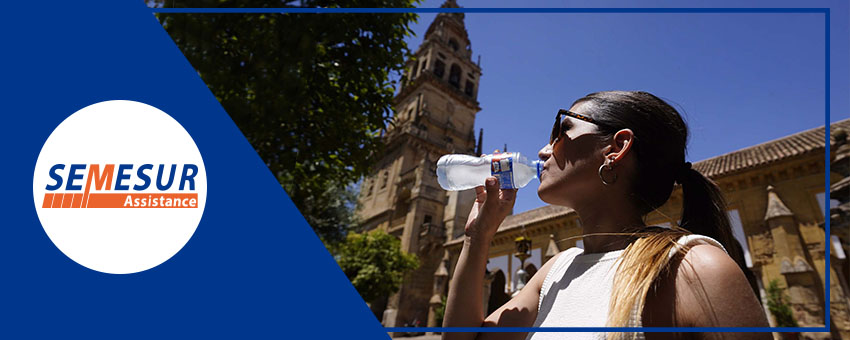
HEAT WAVE IN SPAIN: HOW TO PREVENT HEAT STROKE
During a heat wave, there is a high risk of suffering from heat stroke if we are exposed to high temperatures and are not properly prepared. But… what symptoms indicate that you are experiencing heat stroke? At SEMESUR, we explain how you should act to prevent heat stroke.
SYMPTOMS OF HEAT STROKE
Some of the most common symptoms of heat stroke that may occur during a heat wave include:
-
Exhaustion: tiredness and headache.
-
Muscle cramps.
-
Dehydration.
-
Increase in body temperature above 40ºC.
-
General discomfort: nausea, vomiting and seizures.
-
Loss of consciousness in severe cases.
TIPS TO PREVENT HEAT STROKE
It is important to be well protected against rising temperatures. If you belong to any of the risk groups, we also recommend contacting your doctor or healthcare professional for more specific advice.
Our main recommendations for coping with a heat wave are:
-
Avoid going outside or being exposed to direct sunlight during the hottest hours of the day, between 12 noon and 6 pm.
-
Reduce physical activity, especially during the central hours of the day. Choose early morning or late afternoon for exercise to avoid peak heat periods.
-
Do not wait until you feel thirsty and drink water regularly. Avoid alcoholic and sugary drinks.
-
Eat light meals. When we sweat, we lose salts and it is important to replace them.
-
Cool yourself regularly with a shower or by applying fresh water to your face.
-
Keep blinds lowered when sunlight directly hits windows and try to keep them closed during the hottest hours.
-
Avoid sudden temperature changes. Rapid changes in temperature can be as harmful as extreme heat itself.
-
Wear lightweight clothing that allows perspiration and protect your head and eyes with a hat, cap or sunglasses.
-
Be careful with the temperature inside vehicles, as excessive heat can cause drowsiness.
-
Help elderly people or those who belong to risk groups.
ELDERLY PEOPLE, PATIENTS AND CHILDREN DURING HEAT WAVES
Heat does not affect everyone in the same way. Some people are at greater risk:
-
Elderly people, especially those who live alone or are dependent.
-
People with medical conditions (cardiovascular, cerebrovascular, respiratory, kidney or neurological diseases, diabetes, etc.) or those taking certain medications (anticholinergics, antihistamines, phenothiazines, amphetamines, psychiatric medication, diuretics, beta-blockers, etc.).
-
People with reduced mental abilities.
-
Children under 4 years of age.
-
People with obesity.
Do you need medical assistance now?
Our team is available 24 hours a day, 365 days a year to assist you.
(+34) 91 10 10 900