INFOCA PLAN DURING THE LOW-RISK WILDFIRE SEASON
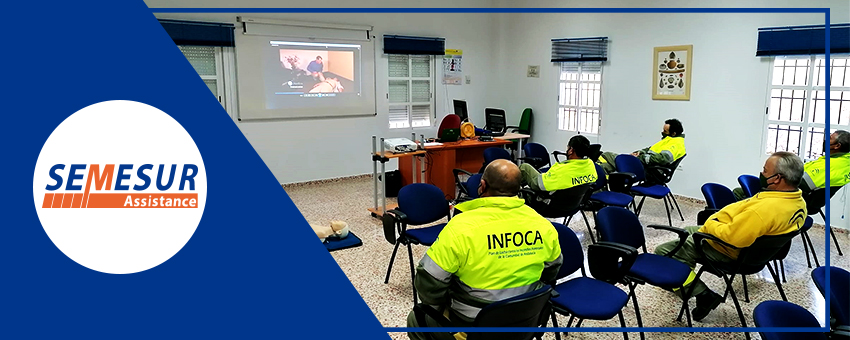
During the low-risk wildfire season, the Andalusian Wildfire Prevention and Extinction Plan (INFOCA) remains highly active. Throughout the winter months, when the risk of wildfires is significantly lower, personnel continue to participate in a wide range of training programmes, courses, and preparedness activities.
These include:
-
Classroom-based training as part of the Training Plan Validation Project for the accreditation of INFOCA command staff.
-
Basic Life Support (BLS) and Cardiopulmonary Resuscitation (CPR) training sessions.
-
Professional qualification courses.
-
Public awareness and prevention initiatives.
Many of these activities are carried out within the framework of the #CILIFO_UE project.
BASIC LIFE SUPPORT (BLS) AND CPR TRAINING
During the first week of March 2022, INFOCA personnel attended refresher training sessions on Basic Life Support (BLS) and Cardiopulmonary Resuscitation (CPR).
Although wildfire emergency personnel are already highly trained, regularly reviewing these life-saving techniques is essential to maintaining the highest level of preparedness and ensuring the best possible response during emergencies.
WHAT IS BASIC LIFE SUPPORT?
Basic Life Support (BLS) refers to the essential emergency procedures performed when someone suffers a cardiac arrest or stops breathing. Its purpose is to preserve vital functions until advanced medical assistance arrives.
Situations that may require Basic Life Support include:
-
Choking.
-
Severe bleeding.
-
Heart attack.
-
Hypothermia.
-
Loss of consciousness caused by low blood sugar.
-
Carbon monoxide poisoning.
-
Drug intoxication.
These emergencies can occur anywhere and require immediate action.
WHAT IS CPR AND HOW IS IT PERFORMED?
Cardiopulmonary Resuscitation (CPR) is a life-saving emergency procedure used when a person stops breathing or their heart stops beating.
CPR combines chest compressions, which help maintain blood circulation, with rescue breaths, when appropriate, to provide oxygen to the body until professional medical care becomes available.
To perform chest compressions correctly, the heel of one hand should be placed in the centre of the casualty's chest, over the sternum, before beginning continuous compressions following current resuscitation guidelines.
Do you need medical assistance now?
Our team is available 24 hours a day, 365 days a year to assist you.
(+34) 91 10 10 900