WHAT IS MONKEYPOX?
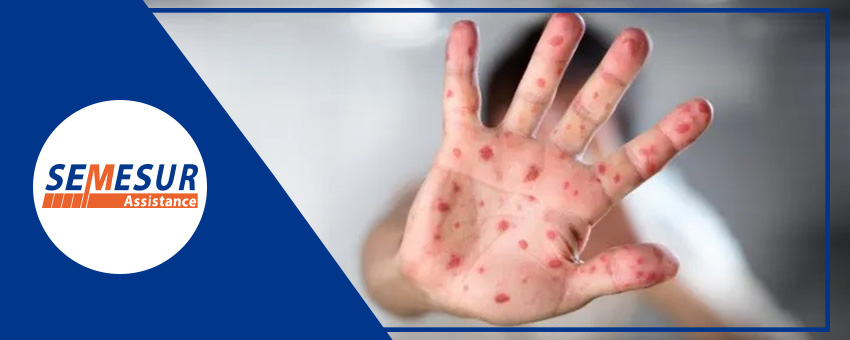
Monkeypox is a rare disease caused by the monkeypox virus, which is closely related to the smallpox virus and causes a similar, although generally milder, illness. The monkeypox virus belongs to the Orthopoxvirus genus.
The World Health Organization (WHO) warned on Sunday, 22 May, that as surveillance is expanded across all countries, more cases of monkeypox are likely to be identified.
Fernando Simón, Director of the Centre for the Coordination of Health Alerts and Emergencies, stated that "significant transmission cannot be ruled out," although he added that it is "unlikely."
HOW IS MONKEYPOX TRANSMITTED?
Monkeypox is transmitted through close contact and exposure to respiratory droplets, either through person-to-person contact, saliva, respiratory secretions, fluid from skin lesions, or contaminated scabs.
The incubation period for monkeypox usually ranges from six to thirteen days, although it can extend to up to three weeks.
WHAT ARE THE SYMPTOMS OF MONKEYPOX?
The symptoms of monkeypox are very similar to those of smallpox, although generally milder. They include fever, headache, muscle aches, back pain, chills, and general fatigue. One of the main differences between the two diseases is that monkeypox causes swollen lymph nodes.
It is also common for monkeypox to cause a rash that begins on the face and spreads to other parts of the body, including the hands and feet. Over time, the lesions form scabs, which eventually fall off.
The disease often causes pain and itching, although symptoms may range from mild to severe depending on the individual case. Regarding risk factors for infection, scientific organisations warn about contact with infected live or dead animals, particularly through hunting and the consumption of bushmeat or wild animals.
WHAT TO DO IF YOU DEVELOP SYMPTOMS OF MONKEYPOX
The Spanish Ministry of Health has developed a protocol for detecting possible cases of monkeypox in Spain. It recommends that anyone with symptoms contact their healthcare centre, self-isolate at home, avoid contact with other people and animals until all skin lesions have healed, and wear a face mask to reduce the risk of transmission.
For close contacts of suspected cases, the same protocol recommends informing other contacts and monitoring body temperature twice a day.
Do you need medical assistance now?
Our team is available 24 hours a day, 365 days a year to assist you.
(+34) 91 10 10 900