Types of Face Masks
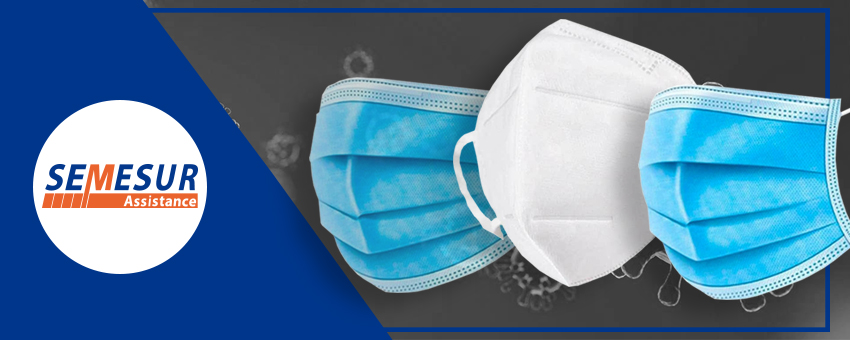
TYPES OF COVID-19 FACE MASKS
Over recent months, face masks have become an essential tool in helping to prevent the spread of COVID-19. Several types of masks are available, each offering different levels of protection depending on their filtration efficiency, intended use, and design.
The main categories are outlined below.
FFP2 Face Masks
FFP2 masks are filtering facepiece respirators that provide a minimum filtration efficiency of 92% while allowing a maximum inward leakage of 8%.
They are primarily recommended for individuals who are at increased risk of exposure to the virus, including healthcare professionals, caregivers, and people who are in close contact with individuals who have symptoms of COVID-19 or have tested positive.
Hygienic Face Masks
Hygienic face masks are intended for healthy individuals who do not have symptoms of COVID-19.
For hygiene and comfort, they are generally recommended for use for no longer than four hours. They should also be replaced immediately if they become damp, damaged, or visibly soiled.
Surgical Face Masks
Surgical masks are recommended for people who have COVID-19 or are suspected of being infected, as they help reduce the risk of transmitting the virus to others.
Like hygienic masks, they should generally not be worn for more than four hours, and they should be replaced if they become wet or damaged.
These masks typically provide Type I bacterial filtration efficiency (BFE).
WHAT SHOULD YOU CONSIDER WHEN BUYING A FACE MASK?
If you are healthy and have no symptoms of COVID-19, hygienic face masks are generally the most suitable option.
If you have symptoms of COVID-19, have tested positive, or have been in close contact with an infected person, surgical face masks are recommended to help reduce the risk of transmission.
FFP2 masks are most appropriate for individuals who are regularly exposed to the virus, such as healthcare professionals, caregivers, or anyone providing ongoing care for people with COVID-19.
WHEN AND HOW SHOULD YOU WEAR A FACE MASK?
Face mask requirements may vary depending on the country, region, and current public health regulations. Always follow the guidance issued by the relevant health authorities where you are located or travelling.
To use a face mask correctly:
-
Wash or sanitise your hands before putting it on.
-
Cover both your nose and mouth completely.
-
Handle the mask only by its ear loops or straps whenever possible.
-
Avoid touching the front of the mask while wearing it.
-
Replace the mask if it becomes wet, damaged, or difficult to breathe through.
-
Remove the mask using the straps and wash or sanitise your hands afterwards.
Correct mask use, together with good hand hygiene, physical distancing where appropriate, and proper ventilation, remains an effective way to help reduce the spread of respiratory infections.
Do you need medical assistance now?
Our team is available 24 hours a day, 365 days a year to assist you.
(+34) 91 10 10 900