A Medical Support Operation Worthy of One of the World's Largest Sporting Events
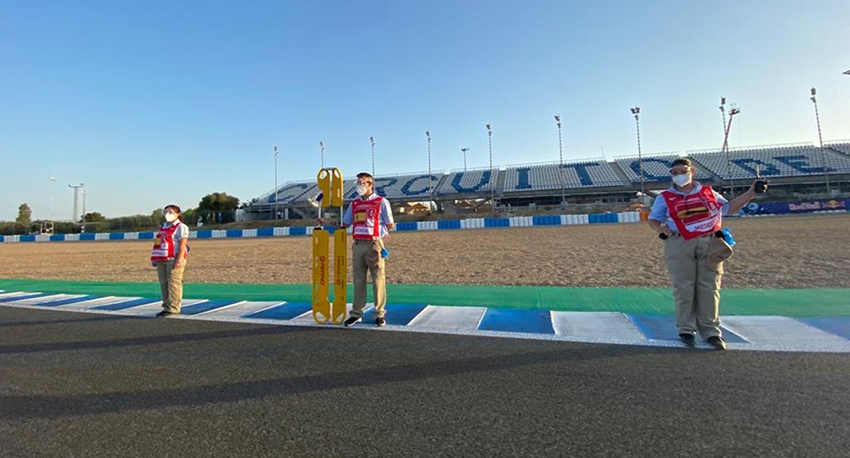
The world's premier motorcycle racing championships returned to the Circuito de Jerez–Ángel Nieto during the year of the COVID-19 pandemic under very different circumstances. With spectators unable to attend, the comprehensive medical operation designed by Semesur Assistance was focused entirely on the racing circuit and the professionals competing over three consecutive race weekends—from 17 July to 2 August—including two MotoGP Grand Prix events and one Superbike World Championship round.
Alongside the challenges of supporting elite motorsport, the event also had to comply with strict COVID-19 prevention measures established under protocols approved by Spain's Higher Sports Council (CSD) and Dorna Sports.

A Secure Medical Environment
In accordance with these protocols, a restricted "Clean Zone" was established within the circuit. Access was permitted only after participants had successfully completed the required COVID-19 testing and presented a dedicated mobile application functioning as a digital health pass.

Once inside the secure area, all members of the medical team followed strict infection prevention measures, including the appropriate use of personal protective equipment (PPE), enhanced hygiene procedures, and physical distancing wherever operationally possible.
Medical Resources and Personnel
Drawing on many years of experience providing medical services for major international sporting events, Semesur Assistance deployed a healthcare operation capable of meeting the demands of one of the world's leading motorsport competitions.
The medical response included:
-
Twelve ambulances, comprising both Mobile Intensive Care Units (MICUs) and Basic Life Support (BLS) vehicles.
-
Every ambulance staffed by a physician, nurse, and emergency medical technician (EMT).
-
Fourteen Ground Posts positioned around the circuit, each staffed by experienced nurses and paramedics to provide immediate support in the areas where accidents are most likely to occur.
The entire medical operation was coordinated by the Circuit's Chief Medical Officer (CMO), Dr Houssam, whose extensive experience directing MotoGP medical services ensured the effective management of more than 150 healthcare professionals responsible for both the racing operation and public medical services in previous editions.
The Medical Centre
Although social distancing requirements reduced the available capacity of the Circuit Medical Centre, its multidisciplinary team remained fully operational, including:
-
Chief Medical Officer (CMO)
-
Trauma surgeons
-
Orthopaedic specialists
-
Intensive care physicians
-
Anaesthesiologists
-
Radiologists
-
Emergency physicians
-
Nurses and specialist healthcare staff
To compensate for the reduced capacity, an additional medical facility was established in the VIP Grandstand, staffed by a physician, nurse, emergency medical technician, and dedicated ambulance.
This secondary medical post treated patients with minor conditions, allowing the main Medical Centre to remain available for more serious emergencies.
Rapid Response Vehicles
One of the fastest elements of the medical operation consisted of two high-performance Omega intervention vehicles, driven by specially trained professional drivers.
Each vehicle carried:
-
An intensive care physician.
-
An emergency care nurse.
-
Advanced life-support equipment.
These highly specialised teams were trained to respond to Code 2 and Code 3 emergencies (major medical incidents requiring immediate intervention).
The Omega vehicles entered the circuit only after racing had been neutralised. Once authorised, they were capable of reaching an injured rider in less than 30 seconds.
During racing sessions, one vehicle remained positioned in the pit lane, while the second was strategically located approximately halfway around the circuit to ensure the fastest possible response regardless of where an incident occurred.
COVID-19 Screening at the Medical Centre
The pandemic also required the introduction of a dedicated pre-triage area outside the Medical Centre.
Every patient underwent an initial assessment that included temperature screening and symptom evaluation before entering the facility.
Anyone showing even the slightest indication of possible COVID-19 infection was immediately transferred to a designated isolation area for further assessment.
Three Consecutive Weeks of Elite Motorsport
Throughout the three-week programme of MotoGP and Superbike events, the medical teams from Semesur Assistance were responsible for providing the initial emergency response whenever a rider required medical attention.
Their role included immediate assessment, emergency treatment, and stabilisation at the scene. Once the rider's condition had been brought under control, specialist medical teams appointed by Dorna Sports and Quirón Salud assumed responsibility for further evaluation and decisions regarding ongoing treatment.
Unlike previous seasons, the challenges of the COVID-19 pandemic required not only exceptional medical preparedness but also the continuous operation of a highly specialised healthcare service over three consecutive race weekends.
Thanks to the experience, professionalism, and organisational capability of Semesur Assistance, the championships were able to take place while maintaining the highest possible standards of medical care and health protection for everyone involved.

Do you need medical assistance now?
Our team is available 24 hours a day, 365 days a year to assist you.
(+34) 91 10 10 900